Radon is a colorless, odorless radioactive gas, and about half of Colorado homes have levels above the EPA action level of 4.0 pCi/L, according to the Colorado Department of Public Health and Environment. Every Front Range county we serve is rated EPA Radon Zone 1, the highest-potential zone, so we recommend radon testing for every Colorado home purchase.
Radon is one of the most common environmental hazards in Colorado homes, and you cannot see, smell, or taste it. The only way to know a home's radon level is to test.
What is radon?
Radon is a radioactive gas released naturally as uranium breaks down in soil and rock. It moves up through the ground and can enter a home through foundation cracks, sump pits, crawl spaces, and gaps around pipes. According to the U.S. EPA, radon is the second leading cause of lung cancer overall and the leading cause among non-smokers.
How common is radon in Colorado?
The Colorado Department of Public Health and Environment reports that about half of Colorado homes have radon levels above the EPA action level of 4 picocuries per liter (pCi/L). The EPA rates El Paso, Denver, Arapahoe, Adams, Douglas, Jefferson, Boulder, and Larimer counties as Radon Zone 1, the zone with the highest predicted indoor radon levels.
What does 4.0 pCi/L mean?
4.0 pCi/L is the EPA action level. If a test shows radon at or above 4.0 pCi/L, the EPA recommends installing a radon mitigation system. The CDC notes that there is no known safe level of radon, so lower is always better.
How radon testing works during a home purchase
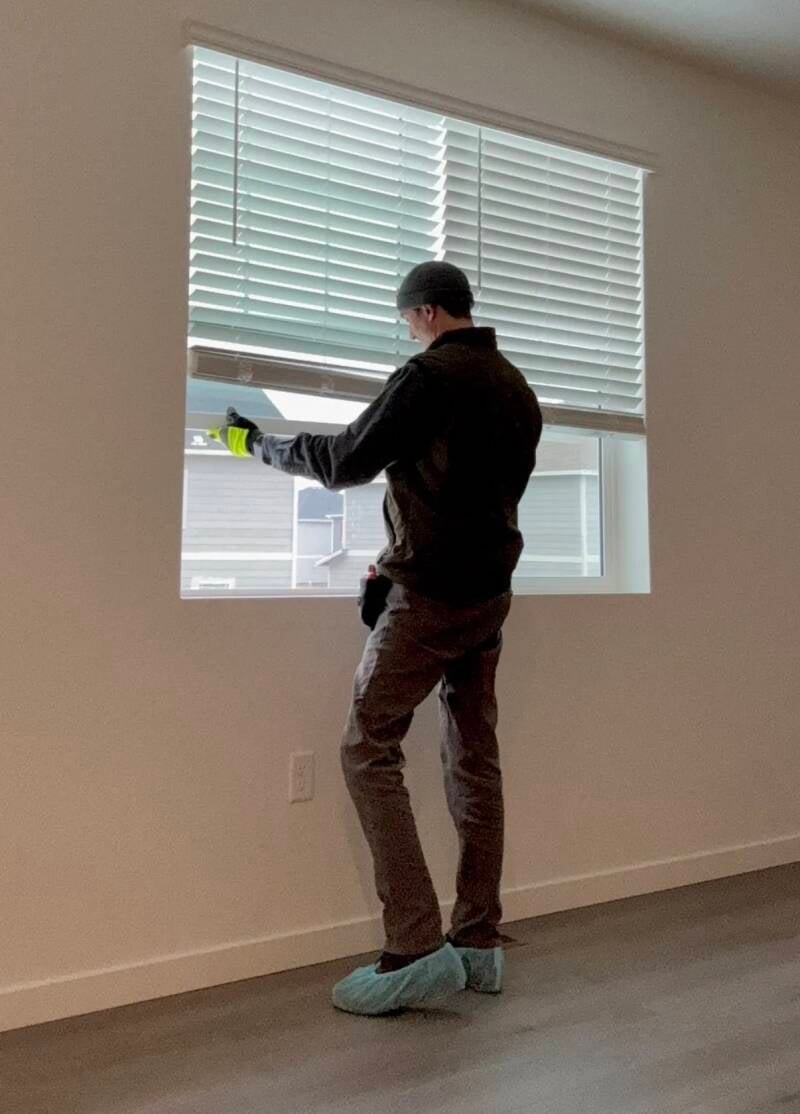
Red Stag Inspections uses continuous radon monitors that take readings over a 48-hour test period, and you receive clear results with guidance on whether mitigation is recommended. Radon testing is easy to bundle with your home inspection so it fits inside your inspection window. Learn more about our radon testing.
What if the home tests high?
A high radon result is common in Colorado and is usually fixable. Mitigation systems typically vent radon from beneath the home to the outside. Buyers often negotiate for the seller to install a system, or for a credit at closing.
Buying a home on the Front Range? Call (303) 351-1045 or request a free quote to add radon testing to your inspection.
Frequently asked questions
How common is radon in Colorado homes?
According to the Colorado Department of Public Health and Environment, about half of Colorado homes have radon levels above the EPA action level of 4 pCi/L.
What is the EPA action level for radon?
The EPA action level for radon is 4.0 picocuries per liter (pCi/L). If a home tests at or above that level, the EPA recommends radon mitigation.
How long does a radon test take?
Red Stag Inspections uses continuous radon monitors over a 48-hour test period.
Are Colorado Springs and Denver in EPA Radon Zone 1?
Yes. The EPA rates El Paso County (Colorado Springs) and Denver County as Radon Zone 1, along with Arapahoe, Adams, Douglas, Jefferson, Boulder, and Larimer counties.

Add comment
Comments